All posts by Mike Goldstein

Getting ready for our CSMA gallery show

©Ridenour_Lotus_2453.a-RecoveredWe will exhibit our work at the CSMA gallery from August 5 – 26, with an opening reception on the 5th from 5:00 – 8:00pm for Gallery Night.  The theme will be nature photography, and your images can come from anywhere in the world (or in Peter’s case, anywhere in the solar system).

To have an image in our show, you must be a current CNP member.  Please send 3-4 images as jpgs (with title and size info) to Nancy Ridenour by June 30.

We will hang our images on August 2nd.  All images must be matted in white and framed in black, or on stretched canvas.  Please let Nancy know your availability to help with the show.  We’ll answer any questions you have at our June 2nd meeting.

June 2 meeting info

The photo sharing theme will be “spring flowers”.   This is a perfect time of year to get memorable images!

In addition, Adam Baker will will give an overview and tutorial on the Nik plugins.   These are free and incredibly powerful.  They run as plugins in Photoshop or Lightroom and can also run as stand-alone apps.  If you can, get the plugins installed on your laptop and bring it to the meeting so you can follow along.

Before the meeting, we’ll have a photo shoot at the Botanical Gardens of the Cornell Plantations starting at 6:00.  We’ll be at  Comstock Knoll, where the rhododendrons and azaleas are blooming.

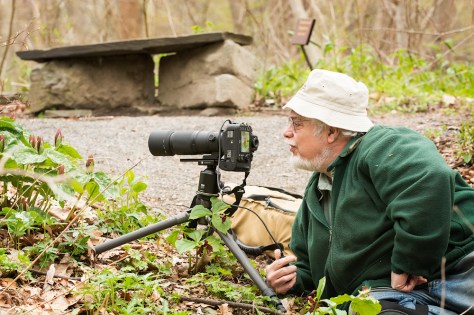
These pre-meeting shoots are a great opportunity to share ideas and gear, and learn new techniques. Here’s Mark Malkin the macro master shooting a classic Nikon 200mm macro lens in the Mundy wildflower garden before our May meeting:

Mark_in_Mundy_2016-05-05_1
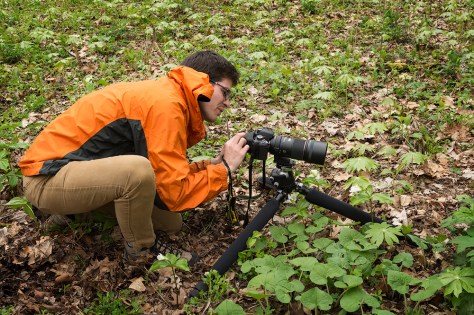
New member Ethan Jost tries out a Sigma 150mm macro on a Really Right Stuff tripod/ball head.  He’s using an LCD loupe to check focus with a high degree of precision:
Ethan_in_Mundy_2016-05-05_9
Ethan now has a much better idea how this gear works, and his parents will probably get quite the list when the holidays roll around. 🙂

Pre-meeting photo shoot on May 5

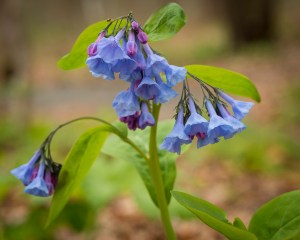
Virginia Bluebells-20160503_032Prior to our usual meeting this Thursday, we will have a photo shoot in the Mundy Wildflower garden at 6:00pm. There are two entrances: if you are walking from campus, use the walking path off of Judd Falls Rd. just east of the Plantations’ Botanical Garden. If you are driving, there is a parking lot at the intersection of Forest Home Drive and Caldwell Rd (just south of the Forest Home bridge).

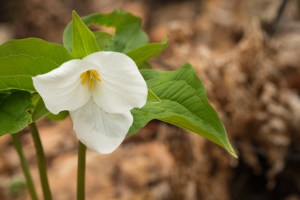
Trillium grandiflorum-20160503_029There is a chance for rain on Thursday. The weather will reduce contrast and we’ll get those nice water droplets on the flowers. However, if it is raining hard, we’ll cancel. I’ll send an email to the CNP list by 3:00pm if we cancel. Otherwise, I’ll see you there.
Many thanks to Paul for scouting locations today!  The images on the right are from his scouting trip.


Theme for May 5 meeting

The photo sharing theme will be “dramatic contrast”.  There’s a lot of possibilities with this theme!  You can incorporate contrasts in color, light, content, etc.
Also at our May meeting, Paul will go over image resizing techniques.
Before the meeting, we’ll have a photo shoot on the Cornell campus starting at 6:00.  We’ll decide on the exact location when we get closer to the meeting date and can evaluate conditions, but it will probably be in the Mundy wildflower garden or the Harder watercourse garden in the arboretum.

CNP show winners!

Thanks to all who come out to our show opening at the Unitarian Church.  A big thanks to Carol for organizing the show and to Jen for baking the yummy treats.

We had around thirty images in the show.  The quality of the images was quite high and it was challenging to decide which ones to vote on for our prizes.

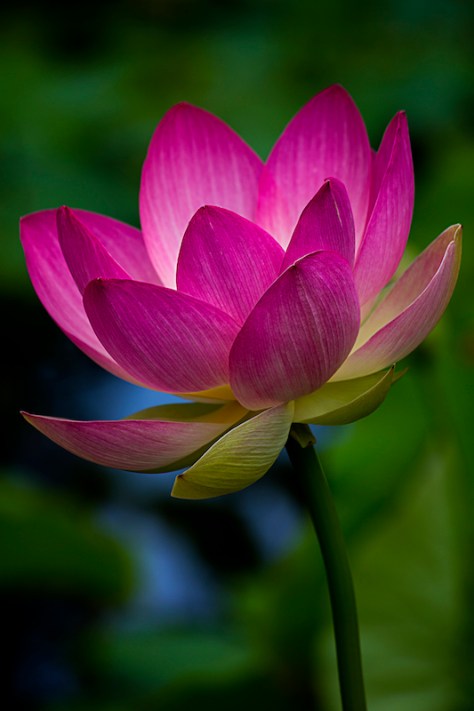
Congratulations to the winners!  The Best in Show award went to Nancy Ridenour (Macro Lotus)

©Ridenour_Lotus_2453.a-Recovered
We had a tie for the Most Innovative award:
Mark Malkin (Last Color)
Malkin Last Color DCS3257-1
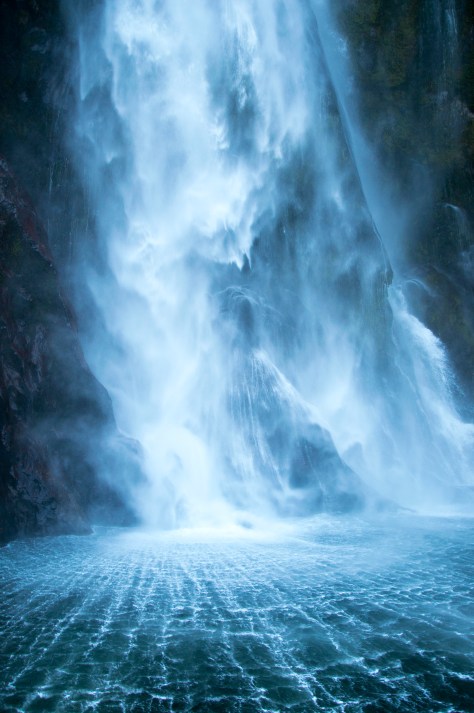
Aubrey Kelly (Lady Bowen Falls)
Lady Bowen Falls - Aubrey Kelly
The show will run until June 8.

CNP show at the Unitarian Church

CNP members will be showing off their best images in the gallery of the Unitarian Church, at 306 North Aurora Street in Ithaca.

Thanks to all who submitted images and attended the opening reception.  A special thanks goes to Carol for organizing the event.  The church gallery will be open to the public from 9am to 4pm on weekdays as well as after the Sunday services from approximately noon to 1pm.  Many of the images are for sale; a price list and artist contact information is available at the gallery.  The show runs from April 14 until June 8.

Lessons from the Galapagos

by Paul Schmitt

There were many lessons learned in preparing for and making the most of our travel. It is not possible in a newsletter to bring forth the many photos nor all of the insights gained. There are, however, points which are valuable for a big trip and for a trip two hours distant to a new location. First, let’s describe the trips three parts. Most routes to the Galapagos go through Quito, Ecuador. Since a cancelled flight from the US generally means a lost day, it is wise to get there at least day early. The tour leader schedules the first day as a trip to Guango Lodge to see and photograph mountain hummingbirds. If a travel delay causes clients to miss that day, they are still on the next day’s flight to Galapagos. Miss that flight and you literally miss the boat for the week. We arrived an extra day early to have a day tour of historic Quito. Great idea and a real stress reliever . Whether it is for a sunrise at Montezuma or Quito, arriving at the last moment creates unnecessary anxiety. Visiting the center of Quito made a great beginning.

For a big trip, get to know the leader and how the tour works. Look at the timing for our departure to the islands at left. He hired a fixer to get us to the flight which included a bus, group check-in, help with security and agricultural screening. The trip out there is a busy, long day and this was a BIG plus. We were on the yacht before noon! Our leader, a birder/photographer himself, got us ashore early for the best light.

The days were very full and the equatorial climate is unlike what you experience in New York, so here are some lessons on what was important. The white board at right listed a day’s plan. So, do a lot of walking to get in shape. The sun is unlike what you know; protect yourself. There are no benches on the trails; wish we’d had a small seat. Drink a lot of water. Note the two items that were questionable.

Finally, you can do a lot of planning from home to prepare you for making the most of an expensive trip. I should have spent a lot of time on eBird for both Guango Lodge birds and for the islands on our route. Finding what had been seen at Guango in August for the last ten years would have greatly prepared me for the overwhelming number of new birds seen.

What lenses does the photographer need? The research above can do a lot to answer that, and the trip leader, if competent , will have a good idea. But, our leader hauled a big tripod and 500 mm lens until it wore him down.  Note that you really need to backup all files via laptop and keep a copy on a flash drive in your pocket when traveling.

Apps for planning a photo trip

by Paul Schmitt

Mike Goldstein offered some background on tools that he is currently using to prepare for a three week trip from Nevada up to Seattle. Using the internet (and presumably other) resources, he located potential photo locations and pinned them to a custom map in Google Maps. He also located lodging along the way and added those as pins. For each pin, he could color code it for priority plus attach links for details such as a hotel website, park website or phone number. Google Maps will also create driving routes to a selected next stop from the current location with drive time calculated.

A second part of the planning was locating apps which support a photographer both in preparation and then in the field. One favorite is PhotoPills which is currently on iTunes ($10) with plans for an Android version in the future. The range of features includes trip planner, sun/moon positions, night sky, DOF, FOV, time lapse and low light calculations. It seems to combine what has usually been scattered among a number of apps. The Photographer’s Ephemeris is another well respected app.

This spurred some more research by your editor. Further planning tools include the StuckOnEarth (free on iTunes ) which pulls up Flickr images for a huge range of worldwide locations. Try it for a place you are familiar with to see what it would offer in a new location. Unlike some other sources, it is rich in landscape and nature photos. Online, Sightsmap gives a world view which is colored like a heat map to indicate “hot spots” of posted images. One can zoom in to research a desired location. It is, however, weak on outdoor photos, and some hotspots lack photos to pull up .

The GPS data for a wide range of good photos are available on loc.alize.us.  This can be used to pin locations on a custom Google map. You could then use a GPS navigator to lead you to the exact spot.

Predicting the precipitation, wind and clouds for the next day is another valuable resource that can be accessed in the field with a cell signal. Some good resources include the apps Wunderground and Storm,  http://forecast.io/  for the weather patterns in the next week, and the National Weather Service.  It has a powerful tabular feature that predicts accurately by the hour sky cover, wind, temperature and more.
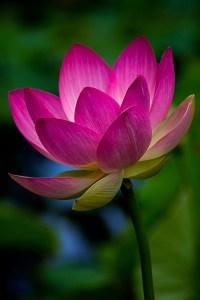
Photo assignment for the April 3 meeting

Our photo assignment for April 2014 is experimentation with white balance. Often photographers will set the white balance on their camera to match the color temperature of their surroundings; this enables the photographer to capture accurate color in the scene. However, just because your white balance is correct, doesn’t mean it’s “right”.  White balance can be manipulated, in camera or in post, to give the image an entirely different look.

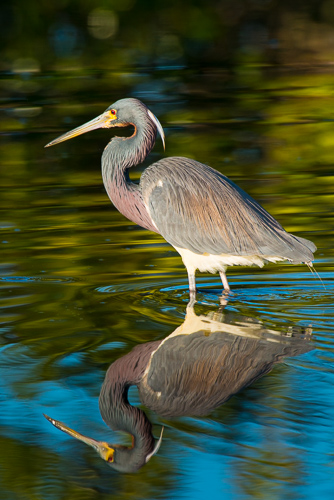
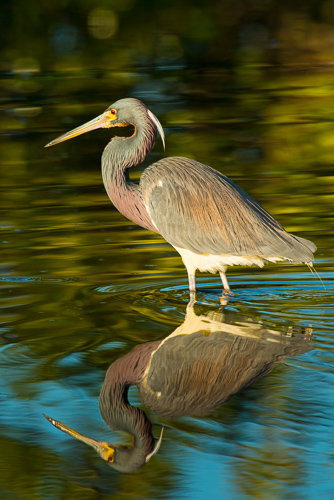
For example, this photo has the white point set to 5500K

5500K


and this version is at 4900K for a warmer look

4900K bird

Members are asked to bring in warm and cool images (maximum of 3) and we hope to have a discussion on the effect white balance plays in a photo.

For more information on white balance, check out the tutorial Cambridge in Color.


How to do macro photography on a budget

At the April 3rd meeting of Cayuga Nature Photographers, Mark Malkin will show us how to do macro photography without a macro lens.  Spring brings a blossoming of macro subjects, but macro lenses can also bring a relatively large price tag.  So, Mark’s demonstration will focus on the use of close-up filters, extension tubes, and reversal rings as inexpensive ways to get into macro photography.  Bring your camera and tripod so you can try out some new toys and techniques!  We have Nikon gear lined up, and we are looking for Canon gear.  Spring is a great time to explore macro subjects. This will be a great way to prepare for spring. We will meet in room 404 of the  Cornell Plant Sciences Building at 7:30 pm. All levels of photo skill are welcome.Bee on flower